
About
I’m Danny, a Data Scientist at Chase. I’m a full-stack data scientist who likes building things - from messy data to clean models to presentations that actually land.
How I Got Here
When I was 14, I honestly thought maybe I could take my hobby in chess and go pro at some point in my life - only to realize that some of the greatest grandmasters in the world already attained a grandmaster title by 13 - so that probably wasn’t going to pan out for me as I tried to grind through my high school classes. So in the meantime, I played for sport, for fun, and for the occasional chance to go to Albany with my high school team to compete. Life was good.
In 2017, Google’s DeepMind team released AlphaZero - a brand new chess engine I only learned later was trained with neural nets. It beat Stockfish, which was the strongest chess engine in the world. Now at the time, I wasn’t very involved or interested in the world of tech and the future of machine learning and data science. I remember one day opening my phone to read a Reddit thread that this new machine defeated Stockfish soundly in a controlled environment - and I had to see for myself. I was simply blown away that somehow - this machine was inexplicably beating the strongest chess engine I knew and used all the time for my analysis.
For my fellow chess enthusiasts, I was incredibly stunned by Game 8 (which wasn’t even the flashiest or the most technical of the games played), where AlphaZero was able to foresee a long-term trap that Stockfish overlooked, by isolating and trapping the b7 bishop in exchange for one pawn of material - leaving black almost permanently crippled until the conclusion of the game. (See the positions below)
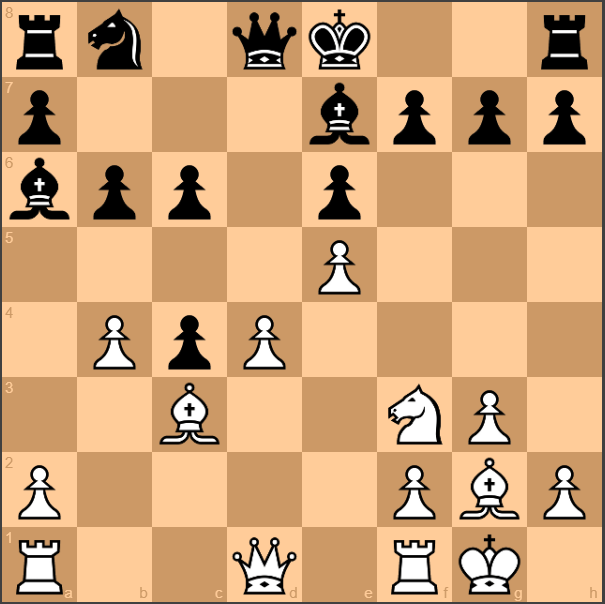
And after 13…b5 14. Nd2 0-0 15.Ne4 Bb7 16.Qg4 - white clearly has a strong initiative.
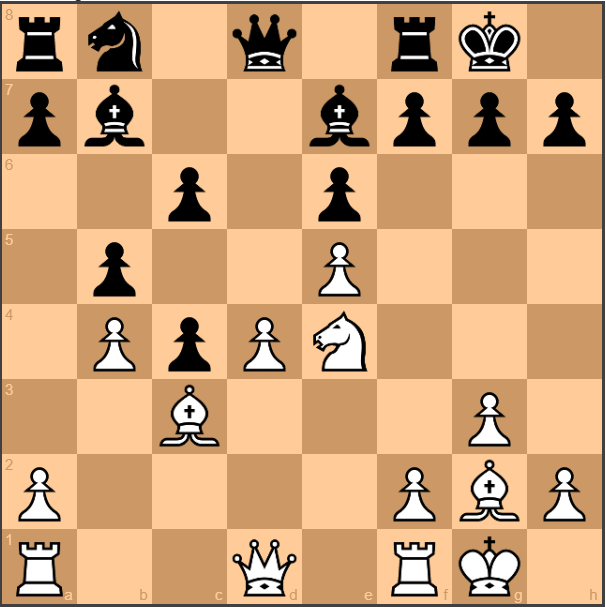
AlphaZero tried a few things - but here is what is truly incredible that I’ll leave the reader with - if we skip to 51.g4:
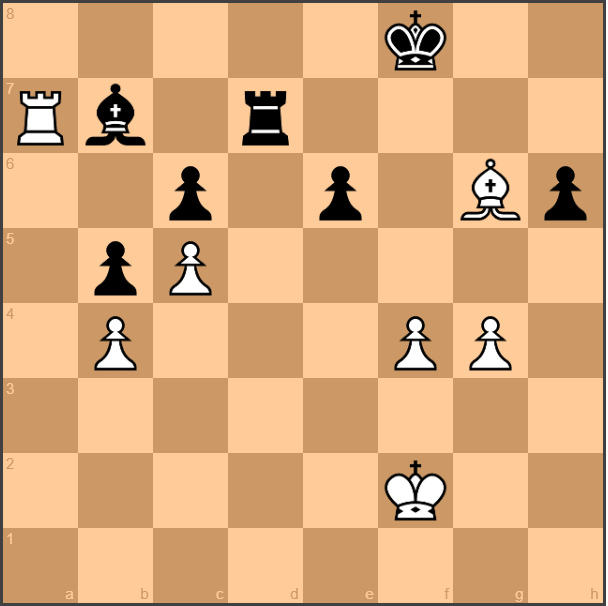
You’ll see white has not only recovered the pawn - but in this endgame he is completely dominating black - and that bishop on b7 is still a problem piece. AlphaZero went on to win this game and black’s position eventually collapsed.
So here was my takeaway after scanning through AlphaZero’s games:
I needed to know how they built it.
And so I started going down a deep rabbit hole that eventually led me to Andrew Ng’s deep learning course, which led me to teaching myself to code, which led me to realizing this might be more fun and better for my chances at paying rent than chess was going to. Who wouldn’t want to build cool machines for business?
There was a catch:
I did not have a traditional mathematics-based route when going into this field, so when I get messages on LinkedIn asking “what did you do to get here?” - I don’t always have a great answer. The cop-out answer is “I got lucky” - which I think is partially true - but I was also gritty and outgoing and I always battled my way uphill to get where I wanted to go. I attended Baruch College - it’s not a target school - but it was strong for business-sense and soft-skills. I took a major and a route that I found would align me the closest to this field. At 20, I networked my way into a data analyst role at SwagUp, a mid-sized startup at the time, and worked full-time while finishing my degree. I learned by doing - I built pipelines that got us out of Excel sheets and into Google Cloud, dashboards that needed to provide quick answers for our sales and operations teams, and even designed real experiments that led to million dollar expansions.
It wasn’t always success - but usually showing up is “80% of the work”. When I first interviewed for JPMorgan, I didn’t get the offer. Six months later, I tried again, attending a company-sponsored hackathon to get my resume at the top of the pile. Within 48 hours - we delivered a project on the environmental tradeoffs and impact sizing of using nuclear vs. non-renewables for energy that actually told a story. I finally had the chance to interview again after our team landed as finalists.
The first two years at Chase were consulting-style work, rotating across six-to-eight month projects with different teams and partners. It was my first real experience in a corporate environment - so the pace and the culture of a startup didn’t really stick in a bank. I learned how to build presentations, work cross-functionally with our partners, and actually deliver the data science that our leaders wanted. I learned the hard way that I couldn’t build AlphaZero every week - or every 6 months - the real cornerstones of data science came from communication, winning as a team, prioritizing what brings real value, and even knowing when to say “that’s not the right question.”
Today I’m on a team that focuses on our branch ecosystem, where I’m building out the future of operations within our branch network that connects our bankers to over 1 million customers daily.
Career Timeline
- Optimization and experimentation
- Cross-functional analytics projects
- Causal inference and experimentation
- Experiment design for sales strategy
- Dashboards (Grow, Tableau)
- Data pipelines: Salesforce, QuickBooks, Google Cloud
Education
Other:
- CUNY Tech Prep (2021-2022) - Competitive DS/SWE training program
- President, Baruch College Chess Club (2018-2020)
Tech Stack









Outside of Work
Chess, jiu-jitsu, fantasy books.
As of May 2026, I took on a more formal role co-founding Pressure Point Apparel alongside my friend Rosa Khaimova. Pressure Point is a BJJ-focused apparel brand built around a simple philosophy: pressure is a privilege. In grappling, pressure teaches composure, patience, and the discipline to stay focused when things get difficult - and we believe that mindset extends far beyond the mat. The brand emphasizes control over chaos, timing over force, and quiet confidence over loud aggression.
Feel free to reach out on LinkedIn or check out my work on GitHub.